Out of Stock
For Laboratory Research Use Only
Some peptides are studied for performance.
Others are explored for regeneration.
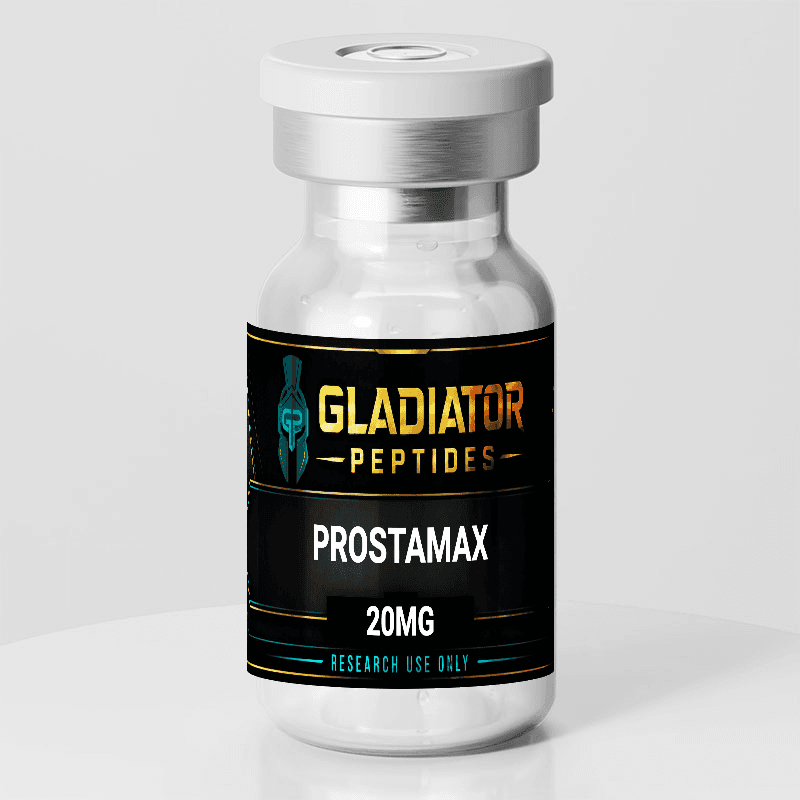
Prostamax (KEDP) has attracted attention among researchers studying bioregulatory peptides and prostate tissue signaling.
This short tetrapeptide belongs to a class of compounds investigated for their ability to interact with cellular gene expression and tissue-specific regulatory pathways. In laboratory models, researchers explore how peptides like Prostamax may influence cell communication, inflammatory signaling, and tissue-specific cellular activity.
Because prostate tissue is highly hormone-responsive and regulatory-driven, peptides that interact with these systems provide an interesting model for studying cellular regulation and tissue aging mechanisms.
For investigators exploring peptide-based bioregulation, Prostamax represents another tool to examine how small signaling peptides interact with complex biological systems.
Research Background
Prostamax is part of a class of short regulatory peptides that have been explored in experimental models of prostate tissue biology.
In preclinical research, peptides with this structural motif have been studied for their potential interaction with:
• Inflammatory signaling pathways in prostate tissue models
• Cellular gene expression regulation
• Chromatin interaction and peptide-DNA binding behavior
• Tissue-specific regulatory signaling
These investigations aim to better understand how small peptides may influence cellular communication within hormone-responsive tissues.
Mechanism of Research Interest
Bioregulatory peptides such as Prostamax are thought to interact with gene regulatory regions within cellular DNA, potentially influencing how certain genes are expressed within targeted tissue models.
Researchers are particularly interested in exploring how peptides like Prostamax may:
• Bind to specific DNA regulatory regions
• Influence cellular transcription activity
• Affect cellular repair and regulatory signaling pathways
• Modify inflammatory signaling behavior in tissue models
These properties make Prostamax a compound of interest for laboratories investigating epigenetic peptide signaling mechanisms.
Product Specifications
Compound: Prostamax (KEDP)
Sequence: Lys-Glu-Asp-Pro
Form: Lyophilized peptide powder
Purity: ≥98% (HPLC tested)
Grade: Research Grade
Storage:
2–8°C short term
-20°C long term storage recommended
Handling:
Reconstitute with sterile laboratory solvent according to experimental protocol.
Lab Rats Quality Standard
Every compound supplied by Lab Rats is produced with strict quality control protocols and undergoes analytical verification prior to release.
Because when you’re running experiments…
precision matters.
Research Use Only Disclaimer
This product is intended strictly for laboratory research purposes.
• Not for human consumption
• Not for therapeutic or diagnostic use
• Not approved by the FDA
• For use by qualified research professionals only